The True Prosperity Path (TPP) is a practical program that helps people reframe how they think about money and take measurable steps toward lasting financial freedom. TPP focuses on the mindset shifts and skills that influence e
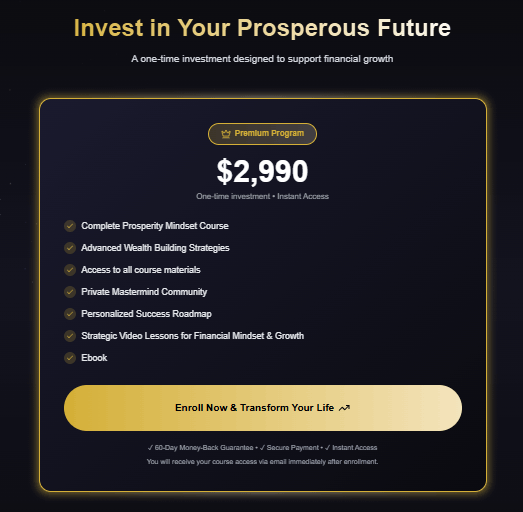
Investing in your prosperous future means making a conscious decision to grow beyond your current financial limitations and step into long-term abundance. True Prosperity Path (TPP) is designed as a one-time investment in yourself—one that supports sustainable financial growth, personal clarity, and empowered decision-making for years to come. Rather than chasing short-term gains, TPP focuses on building a solid foundation that aligns mindset, strategy, and action.
When you invest in the TPP System, you are choosing education and transformation over uncertainty and trial-and-error. The program provides structured guidance that helps you understand how wealth is created, managed, and multiplied, while also addressing the internal beliefs that often hold people back from financial success. This balanced approach ensures that growth is not only achievable, but also repeatable and resilient.
Your journey with True Prosperity Path (TPP) begins at the moment you decide to change how you think about money, success, and your future. Prosperity is not accidental—it is created through intentional choices, aligned mindset, and strategic action. TPP is designed to guide you from where you are today to where you want to be financially, with a clear, structured path that supports real and lasting transformation.
Many people work hard yet feel stuck, uncertain, or limited by past financial experiences. True Prosperity Path helps break that cycle by addressing the root causes behind financial struggle, not just the symptoms. Through mindset recalibration and practical wealth frameworks, the program helps you replace uncertainty and self-doubt with clarity, confidence, and purpose-driven decision-making.
As you progress through the TPP System, you begin to develop a new relationship with money—one built on awareness, strategy, and long-term vision. You learn how prosperous individuals think, plan, and act, allowing you to approach opportunities with a more empowered and informed perspective. This shift creates momentum, helping you move forward with intention rather than fear or guesswork.
Core Principles — Understand TPP’s proven framework for mindset and behavior change.
Video Learning — Short, actionable video modules that transform your financial mindset.
Member Benefits — Access to a member area with templates, tracking tools, and community support.
Independent Review — A clear TPP system review shows how the program delivers both mindset shifts and practical steps.
Practical Outcomes — Skills like budget reframes and investment decision habits that move you toward financial freedom.
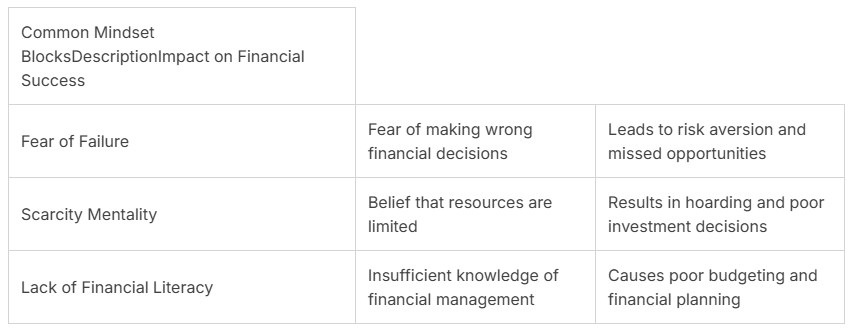
Financial stress affects a large share of Americans — recent surveys show many households report carrying high levels of debt and low emergency savings — which makes changing how we think about money a practical priority, not just a feel‑good idea. Too many people have access to information but still feel stuck because knowledge alone doesn’t remove emotional and cultural barriers to better financial choices.
Popular abundance methods like positive visualization can help motivation, but they often fall short because they don’t change the underlying behaviors and automatic responses that drive day‑to‑day spending and saving. Without addressing deep‑seated patterns, those mental exercises remain surface level.
Traditional techniques often fail because they don’t target the real drivers of financial behavior. In practice, dreaming about money won’t stop impulsive purchases or reframe long‑held beliefs about risk and worth. To get different results you must change the triggers, habits, and thought patterns that produce financial decisions.
Key drivers include past experiences, family messages about money, and learned coping strategies — all of which shape how the mind evaluates risk, reward, and what’s “possible” financially. Addressing those root causes requires behavioral tools, accountability, and practice, not only visualization.
Knowing the right facts about money is necessary but not sufficient. Emotional spending, ingrained family money scripts, and automatic behavioral patterns can keep people from applying what they know. For example, a person who grew up hearing “we don’t talk about money” may resist budgeting conversations with a partner even when they know it would help.
The True Prosperity Path (TPP) program is designed to shift your money mindset and give you practical skills to close the gap between knowledge and results. TPP combines short, targeted lessons with tools and community support so people can move from stalled intentions to consistent financial progress.
At its core, the TPP system treats true prosperity as a combination of mindset and measurable action: change the internal narratives that block better choices, then apply repeatable processes that produce financial freedom. That dual focus—mental reframing plus practical routines—helps learners build lasting habits for success.
The TPP program is modular and implementation‑focused so you can work at your own pace while making steady progress toward financial goals.
The member dashboard centralizes the program's practical resources: personalized financial planning tools to map your goals, progress tracking so you can see weekly wins, and community forums to exchange tips and stay accountable. In short: dashboard → daily visibility → better financial decisions.
The video course is split into focused modules on core topics with clear outcomes. Rather than vague platitudes, each lesson teaches a specific skill—examples include how to reframe a budget so it supports your values, simple investment allocation principles for beginners, and techniques to curb emotional spending. (Typical module length: 20–45 minutes.)
The TPP system also offers additional implementation resources to support that learning:
Interactive webinars that dive deeper into tricky topics
Downloadable financial templates for budgets, debt‑payoff plans, and goal trackers
Regular live Q&A sessions with coaches to troubleshoot real‑world problems
Put together, these parts create a structured place to learn and practice better money habits: the training builds the mindset, the tools make execution simple, and the community keeps you on track throughout the journey.
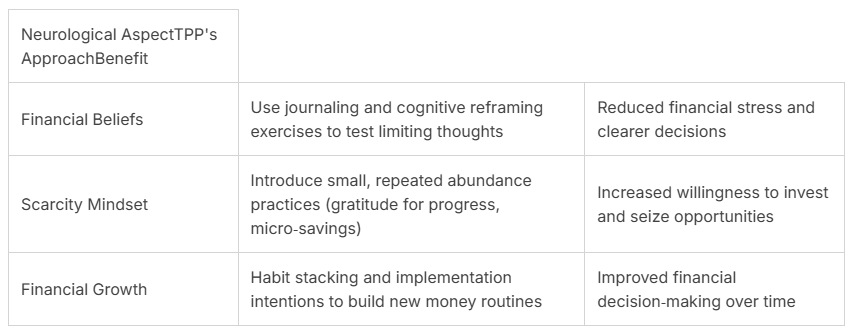
TPP draws on behavioral science and habit‑change principles to explain why people make recurring money decisions—and how to change them. Rather than using vague promises to "reprogram the subconscious," the program applies evidence‑based techniques that reshape thought patterns, reward responses, and routines so your mind supports consistent financial progress.
Money messages passed down through families often become automatic scripts that shape adult behavior. TPP uses guided reflection, reframing, and practical replacements—such as creating a simple budgeting ritual or a weekly money check‑in—to help people interrupt those scripts. These techniques are consistent with behavioral research showing that combining cognitive work (reframing) with repeated practice (habit change) is a reliable route to lasting change.
Examples of techniques used in the program include a short journaling prompt to identify spending triggers, an implementation‑intention worksheet to automate positive choices, and a paced exposure approach to reduce fear around investing. Together, these processes give learners the tools and power to move from knowing about money to acting differently—so lasting financial freedom and success become possible in practice.
The True Prosperity Path system offers a comprehensive set of resources that combine mindset shifts with practical execution — designed for people who want to make money growth part of their everyday life. Rather than broad promises, TPP delivers tools and routines that help you take measurable steps toward better financial outcomes in the real world.
TPP includes a suite of digital tools that make implementation simple and repeatable. These resources are built to reduce friction so you spend less time planning and more time doing: Downloadable templates for budgets, debt‑payoff plans, and savings goals — so you don’t start from scratch. Automated progress trackers that show weekly wins and help prevent drift. Step‑by‑step implementation worksheets that translate mindset shifts into daily actions.
The True Prosperity Path (TPP) system targets the psychological barriers that stop many people from converting financial knowledge into results. Rather than offering only motivation, TPP gives a stepwise process to identify limiting beliefs, replace unhelpful habits, and build reliable money practices so you can make measurable progress toward your goals.
Money messages passed down through families often become automatic scripts that shape adult behavior. TPP uses guided reflection, reframing, and practical replacements—such as creating a simple budgeting ritual or a weekly money check‑in—to help people interrupt those scripts. These techniques are consistent with behavioral research showing that combining cognitive work (reframing) with repeated practice (habit change) is a reliable route to lasting change.
Examples of techniques used in the program include a short journaling prompt to identify spending triggers, an implementation‑intention worksheet to automate positive choices, and a paced exposure approach to reduce fear around investing. Together, these processes give learners the tools and power to move from knowing about money to acting differently—so lasting financial freedom and success become possible in practice.
The True Prosperity Path system offers a comprehensive set of resources that combine mindset shifts with practical execution — designed for people who want to make money growth part of their everyday life. Rather than broad promises, TPP delivers tools and routines that help you take measurable steps toward better financial outcomes in the real world.
TPP includes a suite of digital tools that make implementation simple and repeatable. These resources are built to reduce friction so you spend less time planning and more time doing:
Downloadable templates for budgets, debt‑payoff plans, and savings goals — so you don’t start from scratch.
Automated progress trackers that show weekly wins and help prevent drift.
Step‑by‑step implementation worksheets that translate mindset shifts into daily actions.
The video curriculum focuses on short, actionable lessons that teach both the mental frameworks and the practical techniques you need to succeed. Sample module outcomes include:
Foundations: a clear money audit and a plan to reduce unnecessary expenses.
Mindset Reframe: exercises to shift scarcity thinking into actionable abundance practices.
Investment Basics: simple, practical principles for beginner investors and small business owners looking to grow wealth.
Each module is designed to be consumed in manageable segments (typical lesson length: 20–45 minutes) so you can work it into your day without disrupting work or life commitments.
TPP’s community and accountability features help you sustain momentum. Through forums, group challenges, and coach‑led Q&A sessions, members share real‑world tactics and keep each other on track. Many people report that this social structure is the difference between learning concepts and actually applying them.
In short, the True Prosperity Path system pairs mindset training with concrete tools and community support — a practical way to change how you work with money and increase the odds of long‑term success.
The True Prosperity Path (TPP) system targets the psychological barriers that stop many people from converting financial knowledge into results. Rather than offering only motivation, TPP gives a stepwise process to identify limiting beliefs, replace unhelpful habits, and build reliable money practices so you can make measurable progress toward your goals.
TPP helps you spot scarcity programming—the automatic thoughts and fears that make you hold back—and provides practical techniques to shift them. Typical methods include journaling prompts to surface limiting beliefs, small behavioral experiments to test new outcomes, and deliberate repetition of healthier financial choices. Over weeks, these practices reduce fear‑based reactions and create space for abundance‑oriented decisions.
Pro tip: a simple reframing exercise used in the program asks you to write the fear (“I can’t afford X”), list the real costs and benefits, and then create a counterstatement that highlights choices you can control. That short exercise is a concrete way to begin turning scarcity into possibility.
The TPP system follows a clear, staged framework so change happens in manageable steps. Presentationally this looks like:
01. Audit & Awareness — map current money beliefs and behaviors (self‑awareness).
02. Small‑Action Habit Building — implement micro‑habits (e.g., weekly tracking, automatic transfers) to create reliable progress.
03. Skill Application & Planning — apply practical financial skills (budgeting, basic investing) aligned to specific goals.
04. Maintenance & Growth — scale routines, set new goals, and use community accountability to sustain gains.
Each stage pairs cognitive work (reframing and mindset practice) with actionable steps so the effort leads to measurable change. Many participants report meaningful shifts within a few weeks of consistent practice, while deeper habit change typically solidifies over a few months.
By following this framework—auditing beliefs, practicing small actions, and applying financial planning—you move from understanding money to actively shaping your financial life and goals.
TPP's approach combines practical tools with mindset work, and many participants report measurable improvements in their financial lives. While individual outcomes vary, the program’s case studies and member stories illustrate how consistent application of the methods can lead to meaningful change in both money and life.
TPP has been used by people at different stages—those managing debt, early savers, side‑business owners, and aspiring investors. Case studies (anonymized when required) highlight real examples: a participant who consolidated high‑interest debt and built a structured payoff plan, and a small business owner who adopted clearer budgeting and pricing practices to increase monthly cash flow. These stories show the system can apply across different financial starting points
Reported outcomes include both financial and psychological gains. Note: results are self‑reported unless otherwise stated and will vary depending on commitment and starting circumstances.
Financial Results :
Common financial improvements reported by members include debt reduction, increased savings, and improved investment strategies. Many people see initial changes—better tracking, budget adjustments, small increases in savings—within a few weeks, with more substantial financial shifts often emerging over several months.
Beyond dollars, participants describe changes in confidence and decision‑making: reduced anxiety around money conversations, clearer priorities for spending, and the ability to plan longer‑term. These psychological shifts help sustain financial gains over time and support ongoing success.
If you want to explore specific member stories or see a breakdown of outcomes, consider reviewing the full case studies or contacting support for verified metrics and timelines.
As interest in mindset programs grows, many people want a clear answer: is True Prosperity Path (TPP) legitimate? Based on the program’s stated deliverables—video training, digital tools, and community support—TPP presents the core components expected of a credible financial‑mindset system. That said, evaluating legitimacy requires checking the creator’s credentials, the evidence behind the methods, and the transparency of marketing versus actual deliverables.
TPP was developed by [Creator's Name]. To evaluate credibility, confirm the creator’s professional background—published work, relevant certifications (financial planning, coaching, psychology), prior business experience, or public speaking and media appearances. If those credentials are documented, they strengthen the program’s legitimacy; if not, exercise additional scrutiny and ask for verifiable references.
TPP cites behavioral science and habit‑change principles as the foundation for its methodology. This is a credible basis when specific techniques align with evidence‑based practices such as cognitive‑behavioral approaches, implementation intentions, and habit formation research. For legitimacy, look for citations, white papers, or summaries of studies that support the methods used in specific modules.
Marketing Claims vs. Actual Deliverables :
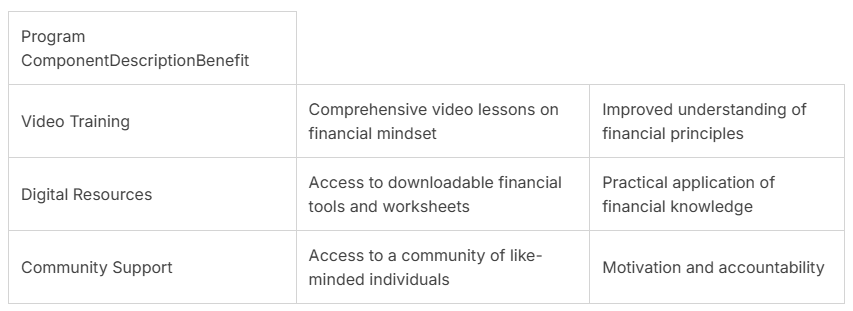
The program markets a combination of video lessons, downloadable resources, and community access. The table below summarizes those advertised components and their intended benefits; verify each item against the official product pages and terms of service to ensure they match what is actually delivered.
TPP appears to align marketing claims with tangible deliverables, but readers should confirm key details—module lists, coach qualifications, support response times, and refund policies—before purchasing.
In short: True Prosperity Path shows the structure and elements of a legitimate program, but legitimacy is best judged by checking the creator’s verifiable credentials, reviewing evidence for the methods used, and confirming the product deliverables and guarantees (for example, the stated refund policy and support contacts). If you value transparency, request those details or review third‑party evaluations before committing.
The True Prosperity Path differs from many programs by combining mindset work with practical tools and community accountability. Rather than offering only high‑level inspiration, TPP aims to deliver a structured pathway that links mental shifts to everyday financial actions—making it a compelling option for people who want both the psychological and tactical sides of wealth building.
The TPP system's notable strengths are its emphasis on evidence‑aligned techniques and its personalized toolkit. Where some courses rely on one‑size‑fits‑all advice, TPP focuses on identifying individual money blocks and tailoring simple interventions to address them. The community component also adds peer accountability, which many members say helps translate learning into consistent practice.
When evaluating cost versus benefit, consider the practical value: if the program helps you make clearer money decisions, increase savings, or optimize pricing for your business, the monetary upside can outpace the upfront cost. ROI depends on your starting point and effort—someone who applies the lessons consistently (tracking, small habit changes, and applying basic investing or business tweaks) is more likely to see a positive return.
Who should consider TPP? If you want a blended approach that addresses both the psychological barriers and the operational steps to make money and manage it better—while getting peer support—TPP may be a good fit. If you mainly need one‑on‑one financial planning for complex investments or tax strategies, a dedicated financial advisor or CPA may be a better order of investment.
In short, TPP offers a practical way to change how you work with money in the modern world, pairing mindset coaching with actionable tools to help you move toward greater financial freedom.
Understanding who gets the most from the TPP mindset system helps you decide whether it fits your goals and schedule. The program is built for people who are ready to pair mindset work with practical effort and consistent habits that improve financial outcomes.
TPP works best for people who bring a combination of readiness and commitment. Typical profiles include:
Early‑stage entrepreneurs: need clearer cashflow, pricing, and goal structure; TPP helps align mindset with simple business actions.
Working professionals: want to stop reactive spending and build purposeful savings and investment habits without overhauling their life.
People rebuilding after debt: benefit from the stepwise framework and small wins that reduce anxiety and accelerate progress.
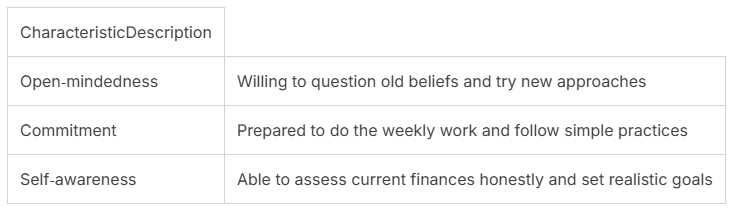
TPP is not a shortcut or a replacement for professional financial advice in complex situations. It may not be the best fit for: Those unwilling to do the weekly work or change money habits.
Anyone seeking tailored tax, legal, or advanced investment advice—those needs are best met by a licensed advisor or CPA. People who expect instant, guaranteed windfalls without sustained effort.
Quick self‑assessment checklist: Do you have 2–4 hours per week to work through lessons and tools? Are you willing to track small actions and follow simple habits? If yes, TPP is likely a good match; if not, you may prefer one‑on‑one coaching or a different resource. If you’re unsure, consider a short trial of module content or a brief consultation with a coach to confirm fit before committing.
The True Prosperity Path is a structured program that combines mindset training, practical tools, and community support to help you improve how you manage money. It works by helping you identify limiting beliefs, practice small habit changes, and apply simple financial techniques so you move from knowledge to consistent action.
TPP presents the typical components of a legitimate program—video lessons, downloadable resources, and community access. Evaluate legitimacy by checking the creator’s credentials, looking for documented evidence or third‑party reviews, and confirming refund and support policies before you buy.
Members typically get a dashboard with tracking tools, the video training curriculum, downloadable templates, and community forums or coach‑led Q&A sessions. This mix of tools and peer support is designed to help you apply lessons and stay accountable.
TPP uses cognitive reframing, journaling prompts, small behavioral experiments, and habit‑building techniques to reduce scarcity thinking and fear‑based reactions. These evidence‑aligned approaches help replace limiting thoughts with repeatable money habits.
Results vary by person and effort. Many people report early wins—better tracking, small savings increases, and reduced anxiety—within weeks; more substantial financial changes often appear over several months with consistent practice. Results are usually self‑reported unless verified by the program.
TPP emphasizes a blended approach—mindset work plus practical tools and community—which can make it more action‑oriented than programs that focus solely on inspiration. Compare features, pricing, and evidence of outcomes to decide which program fits your needs best.
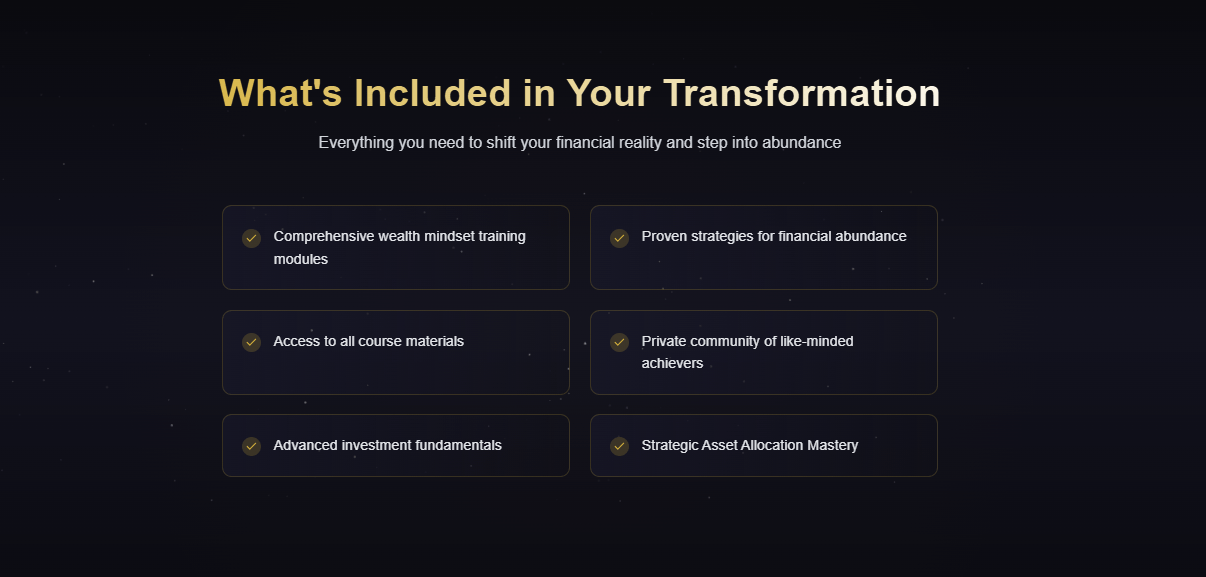
True Prosperity Path is also a comprehensive learning ecosystem. It includes in-depth training modules, strategic video lessons, and practical frameworks that teach how wealth is built, protected, and scaled over time. Rather than promoting hype-driven promises, TPP emphasizes sustainable financial growth through disciplined thinking, strategic planning, and intelligent asset allocation principles.
What sets TPP apart is its holistic definition of prosperity. The program recognizes that true wealth extends beyond income alone—it includes financial confidence, emotional security, freedom of choice, and a healthy relationship with money.
TPP suits people who are ready to do the weekly work (about 2–4 hours per week), willing to change habits, and who want a mix of mindset coaching and practical money tools. It’s a good fit for working professionals, early entrepreneurs, and people rebuilding after debt.
TPP is not a substitute for licensed professional advice in complex situations (tax, legal, advanced investment planning). It may not suit those unwilling to commit time or change habits. Always match the program to your specific needs.
To start: 1) visit the official website and review module descriptions and pricing,
2) sign up and check your email for access, and
3) begin with the first module and follow the implementation worksheets during week one. Confirm the current refund policy (for example, a 60‑day money‑back guarantee if offered) and contact support or a coach if you need onboarding help.
The True Prosperity Path (TPP) program is backed by a clear and risk-free 60-day money-back guarantee, allowing you to enroll with complete confidence. This guarantee is designed to give you the freedom to explore the system, experience the training, and apply the principles without pressure or uncertainty.
If, for any reason, you feel that True Prosperity Path does not meet your expectations within the first 60 days of your purchase, you can request a full refund. There are no complicated conditions, hidden requirements, or uncomfortable explanations needed. The process is straightforward because TPP stands behind the value of its program and the transformation it offers.
This guarantee reflects the confidence behind the True Prosperity Path system. The focus is on genuine mindset transformation and long-term financial growth, not locking people into something that doesn’t serve them. You are encouraged to engage with the materials, participate in the learning process, and determine for yourself whether TPP aligns with your goals.
By offering a 60-day money-back guarantee, True Prosperity Path removes the risk from your decision. You can invest in your personal and financial growth knowing that your satisfaction comes first—and that your commitment to building a prosperous future is fully supported.